
;)
A Pot of Red Broth, A Tale of Four Thousand Years: The Past and Present of Hot Pot Base
Origins: Survival Wisdom Born from Dock-Side Smoke
Hot pot has a far longer history than we might imagine. As early as over 4,000 years ago in the Neolithic Age, ancestors in Gaochun, Nanjing used a "four-legged, double-layered square pottery ding"—with fire beneath and food cooking above—which is considered the earliest prototype of hot pot. The name "hot pot" itself comes from the "gudong" sound food makes when dropped into boiling water, which is why ancient people called it "Gudong Geng" (ancient vintage soup).
The true spicy and numbing hot pot we know today traces back to the banks of the Jialing River in Chongqing during the late Ming and early Qing dynasties. At that time, boat trackers and coolies toiled on the river year-round. To ward off dampness and chill, they gathered beef offal discarded by slaughterhouses and boiled it in earthen jars with chili peppers, Sichuan peppercorns, and other pungent spices. This rustic dish, known as "shuibakuai" (eight chunks in water), traded the cheapest ingredients for the most warming meal—and unwittingly gave birth to what would become Chongqing hot pot. In 1926 (the fifteenth year of the Republic), the Ma brothers opened the first restaurant specializing in maodu (tripe) hot pot on Zaifang Street in Chongqing, using bleached and cleaned tripe served with a dipping sauce of sesame paste and minced garlic—widely regarded as the true beginning of authentic Chongqing maodu hot pot.
Development: From Street Food to National Cuisine
The evolution of hot pot has always mirrored the transformation of Chinese food culture. During the Three Kingdoms period, Emperor Cao Pi of Wei invented the "wushu fu," a bronze pot divided into five compartments that could cook five different flavors simultaneously—a true ancestor of today's "Yuanyang pot" and even the nine-grid pot. By the Tang Dynasty, hot pot had already spread to Japan. In the Song Dynasty, Lin Hong's cookbook Shanjia Qinggong (A Hermit's Pure Offerings) documents his experience of "boiling clouds"—thinly sliced rabbit meat swished in boiling broth and dipped in a sauce of wine, soy sauce, pepper, and cassia—remarkably similar to today's hot pot practice.
The Qing Dynasty marked the golden age of hot pot. Emperor Qianlong reportedly enjoyed hot pot 66 times in a single month, sampling 23 varieties. When Emperor Jiaqing ascended the throne, he hosted a "Qiansou Yan" (Thousand Elders Banquet) with 1,550 hot pot tables—the most spectacular hot pot feast in history.
The true industrialization of Chongqing hot pot began in the 1990s, when brands like Dezhuang, Little Swan, and Qin Ma rose to prominence, transforming hot pot base from handcrafted tradition into standardized factory production. According to data from the Chongqing Hot Pot Association, there are now over 30,000 hot pot restaurants in downtown Chongqing alone.
Going Global: The Spicy World's Conquest
The expansion of this red broth beyond China has been astonishing. According to industry statistics, Chongqing hot pot companies have opened restaurants in more than 20 countries and regions worldwide—Dezhuang in Tokyo's Ginza, Liu Yishou in New York's Times Square, and even "hot pot streets" emerging in Thailand and Singapore. To cater to overseas palates, some Southeast Asian locations have adapted the recipe, replacing beef tallow with vegetable oil.
Industry data shows that China's hot pot market reached 617.5 billion yuan in 2024, with Sichuan-Chongqing hot pot accounting for over 30% of that share and more than 160,000 restaurant locations nationwide.
The Secret of the Base: The Soul of Hot Pot
If hot pot is a feast for the senses, then the base is its soul.
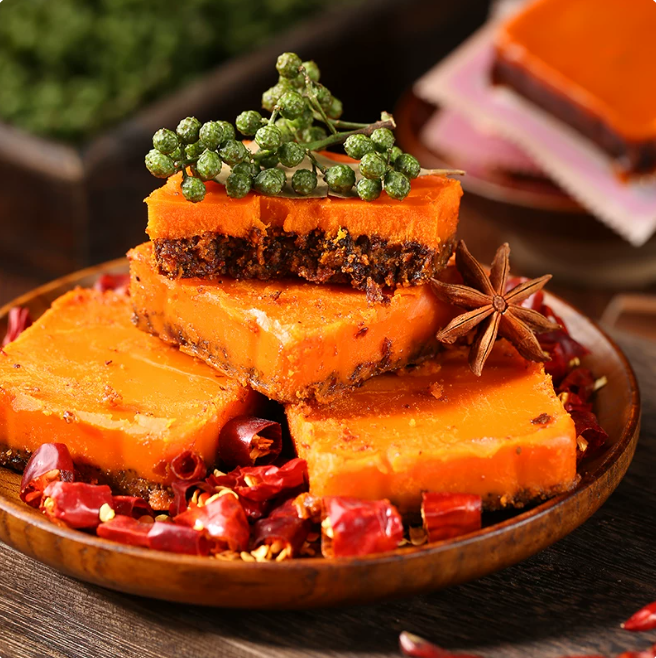
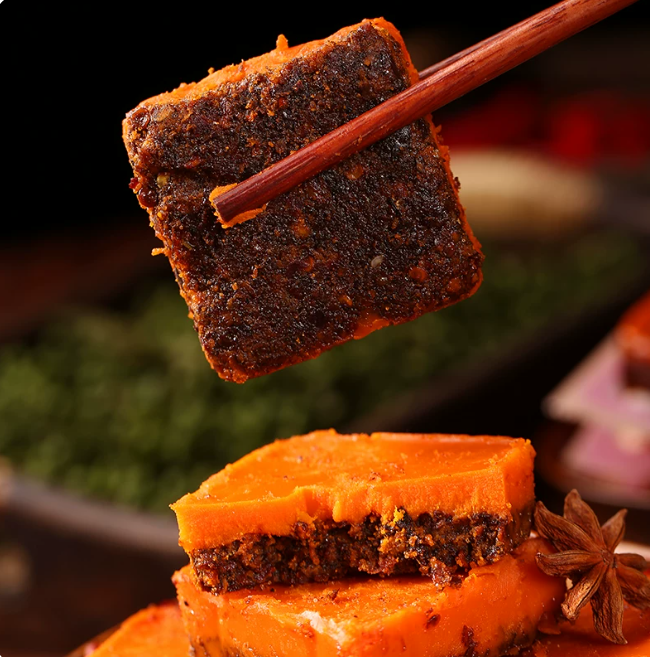
The preparation of authentic Chongqing hot pot base is truly a craftsperson's art. Beef tallow serves as the foundation, melted in a wok over high heat to around 170°C, before Pixian douban (fermented bean paste), garlic, scallions, and ginger are added for fragrance. Then come Sichuan peppercorns and chilies, with fermented glutinous rice wine as a secret weapon—its yeast imparting a biological depth to the broth. With steady stirring and rising steam, the mixture must be tended for two to three hours without leaving the wok. After cooling and a seven-day fermentation period to allow all flavors to meld and mature, the base is finally ready to deliver that signature spicy, numbing, fragrant, and savory experience.
Key ingredients in the base include: Pixian douban providing savory umami, Hanyuan peppercorns for the numbing sensation, Guizhou lantern chili and Sichuan Erjingtiao chili for a heat that tingles without burning, and beef tallow to lock in all the flavors. The recipe's complexity has earned it the nickname "a litany of spices"—star anise, cassia bark, fennel, mountain nai, cao guo, galangal, bay leaves, gardenia, nutmeg, sha ren, baikou, lemongrass, and dozens more, each playing its part.
The Way of Eating: Philosophy in a Single Pot
Hot pot is enjoyed differently across regions. Chongqing locals created the nine-grid pot—the center compartment boils fiercely, ideal for quick-cooking tripe and duck intestine; the four cardinal compartments have moderate heat for boiling vegetables; and the four corner compartments simmer gently for slow-cooked ingredients. The ritual of cooking is precise: "seven up, eight down"—tripe should curl, maodu should bubble, yellow throat should bend, and kidney slices should change color; a second too long and they toughen, a second too short and they remain raw.
Tripe, duck intestine, and yellow throat—ingredients often dismissed as "leftovers" in other cuisines—are among the most beloved choices in Chongqing hot pot. Dipping sauces are typically built on sesame oil and minced garlic, with optional additions like scallions, cilantro, and oyster sauce.
Cultural Warmth: A Pot of Human Connection
Hot pot has long transcended mere "food." It possesses an inherent social magic—friends gathered around, steam rising, and conversation flowing as ingredients tumble through the broth. In Sichuan, no problem is too big for a hot pot to solve; if one isn't enough, then two. Hot pot is at once a stage for delicacies and a home for humble cuts—this inclusiveness reflects the Chinese philosophy of life itself.
As a popular saying goes: "No matter how cold the night, it cannot dim the warmth of human烟火." The hot pot base carries more than just flavor—it is the embodiment of thousands of years of culinary heritage, from a dock worker's makeshift stew to a cultural icon on the international table. This pot of red broth tells the most Chinese of stories in the most boiling way possible.
Henan Zhigong Import and Export Trade Co., Ltd.
Kaiyue Industrial Park, Yicheng District, Zhumadian City, Henan Province.
Email: qiaoxia1112@outlook.com
Website: www.zgdirecttrade.com
Tel/whatsapp: 8615660500603


